Does your child struggle to communicate their needs, participate in everyday activities, or feel comfortable in new learning environments? Have you wondered whether a specialized learning program could help them develop practical skills and greater independence?
Every autistic child learns differently. Some enjoy visual activities, others learn through movement, play, repetition, or hands-on experiences.
Autism learning programs provide individualized support that recognizes these differences. Rather than expecting every child to follow the same approach, effective programs adapt activities to each child’s strengths, interests, and developmental goals.
For Canadian families, understanding how these programs work can make choosing appropriate support easier.
What Are Autism Learning Programs?
Autism learning programs are structured or play-based approaches designed to support autistic children’s development.
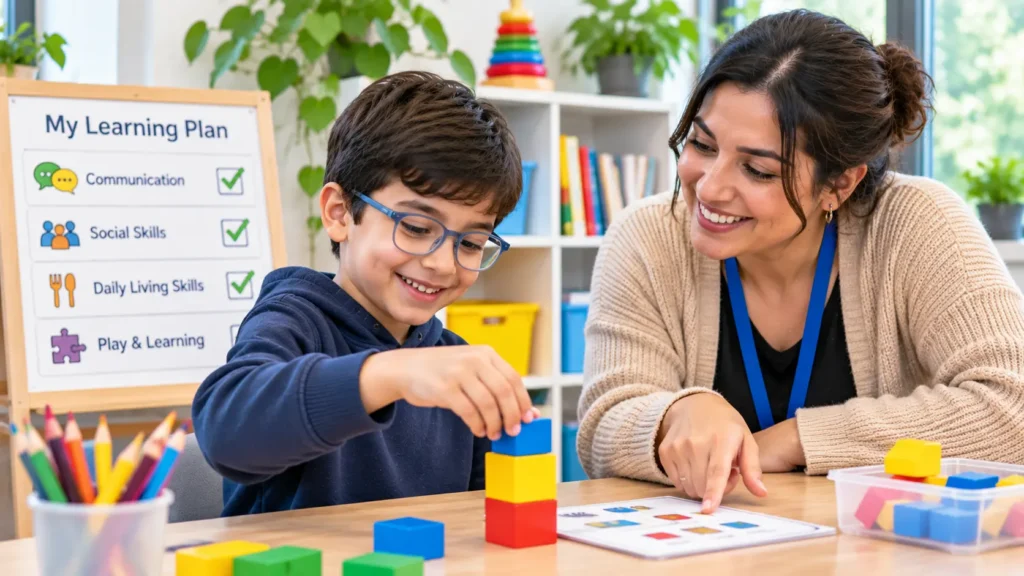
Depending on the child’s needs, programs may focus on communication, social participation, emotional regulation, independence, and everyday learning.
Some programs use Applied Behaviour Analysis (ABA), while others incorporate developmental, educational, or therapeutic approaches.
A suitable program should consider:
- The child’s strengths and interests.
- Current communication abilities.
- Individual learning preferences.
- Sensory and emotional needs.
- Family goals and daily routines.
Professional assessment and ongoing collaboration help ensure activities remain appropriate as children develop.
1. Supporting Communication Development
Communication is an essential part of a child’s everyday experience.
Autistic children may communicate through spoken language, gestures, pictures, signs, or augmentative and alternative communication (AAC) devices.
Learning programs can help children develop practical communication skills such as requesting assistance, expressing choices, and sharing their interests.
For example, a therapist might encourage a child to select between two activities using their preferred communication method.
The objective is meaningful communication, not forcing speech or eye contact.
Families exploring developmental support for younger children can learn about early intervention ABA therapy through Advance Academy.
Individualized early learning can address communication, play, and everyday participation.
2. Developing Social Interaction Through Play
Play provides opportunities for children to communicate, explore interests, and build relationships.
Autism learning programs may incorporate activities such as:
- Cooperative building games.
- Turn-taking activities.
- Shared storytelling.
- Pretend play.
- Outdoor group activities.
For example, two children might build a tower together while practising communication and shared decision-making.
However, social development should respect individual preferences.
Some autistic children prefer parallel play or shorter interactions. These are valid ways of participating.
Learning programs should encourage comfortable connections without requiring children to copy particular social behaviours.
3. Building Independence and Daily Living Skills
Daily living skills help children participate more independently at home, daycare, and school.
Learning programs may support activities such as dressing, handwashing, organizing belongings, and following familiar routines.
Complex activities can be divided into smaller, manageable steps.
For example, learning to get dressed might begin with choosing clothing, putting on one item, and gradually completing additional steps.
Therapists can provide appropriate assistance and reduce support as confidence develops.
Progress should reflect practical improvements in the child’s everyday life, rather than completing activities simply to meet program targets.
4. Creating Positive Learning Experiences
Children are more likely to engage when learning activities reflect their interests and comfort.
Effective autism learning programs may use play-based teaching, visual supports, modelling, and positive reinforcement.
For example, a child who enjoys toy vehicles might explore counting, communication, and turn-taking through car games.
Visual schedules can also help explain upcoming activities and transitions.
A flexible learning environment should allow children to request breaks, communicate discomfort, and make meaningful choices.
The goal is to develop useful skills while maintaining emotional safety and enjoyment.
5. Supporting Learning Across Different Environments
Children often benefit from practising skills in places where they naturally use them.
Home-based activities can support family routines and independence.
Daycare programs may offer opportunities to practise communication, transitions, and play alongside peers.
Virtual sessions can provide additional flexibility for some families.
Advance Academy also discusses ABA therapy at daycare and child development, explaining how support can be integrated into a child’s everyday learning environment.
The appropriate setting depends on the child’s needs, available services, and family preferences.
6. Encouraging Emotional Regulation and Self-Advocacy
Autistic children may experience sensory overload, communication frustration, or difficulty with unexpected changes.
Learning programs can help children recognize and communicate their needs.
Support may include:
- Identifying feelings.
- Requesting breaks.
- Using visual communication tools.
- Recognizing sensory discomfort.
- Practising preferred calming strategies.
For example, a child might learn to communicate that a room is too noisy or that they need additional time before changing activities.
These abilities support self-advocacy and well-being.
Programs should focus on understanding the child’s experience rather than suppressing harmless expressions of distress.
7. Involving Parents in the Learning Process
Parents and caregivers contribute valuable knowledge about a child’s interests, communication, and everyday needs.
Professional programs can involve families through shared goal-setting, progress reviews, and practical demonstrations.
Caregivers may learn ways to support communication, encourage independence, and make routines easier to understand.
Advance Academy’s ABA parent coaching program provides guidance on incorporating individualized strategies into daily family activities.
Parents should not feel responsible for turning every moment into therapy.
Instead, supportive approaches can be incorporated naturally into enjoyable routines.
How to Choose an Autism Learning Program
Before selecting a program, ask how the provider assesses individual needs and develops learning goals.
Consider whether activities respect your child’s communication preferences, interests, and sensory needs.
Ask about professional qualifications, supervision, caregiver involvement, and progress monitoring.
An effective program should explain how progress is evaluated and how strategies change when they are not helping.
Families should also understand costs, scheduling, and available funding options before enrolling.
Frequently Asked Questions
1. What is an autism learning program?
It is an individualized program that supports communication, independence, social participation, and other meaningful developmental skills.
2. At what age can children start learning programs?
Support can begin in early childhood, but appropriate programs may also benefit older children according to their needs.
3. Do autism learning programs use ABA therapy?
Some use ABA principles, while others incorporate developmental, educational, or multidisciplinary approaches.
4. Can these programs improve communication?
They may support functional communication through individualized activities and appropriate professional guidance.
5. Can parents participate in learning programs?
Yes. Many programs encourage caregiver collaboration, shared goals, and practical learning strategies at home.
6. How do parents know whether a program is suitable?
Review professional qualifications, individualized goals, the child’s comfort, available services, and how progress is monitored.
Helping Children Learn in Their Own Way
Every autistic child brings unique strengths, interests, and abilities to their learning journey.
The most meaningful autism learning programs build on those strengths while supporting communication, independence, and everyday participation.
Advance Academy Canada offers individualized ABA services, early intervention, and family-focused support across Canada.
Families can explore available services and speak with the Advance Academy team about suitable learning opportunities.
Because meaningful learning isn’t about making every child the same — it’s about helping each child develop skills that matter to them.